
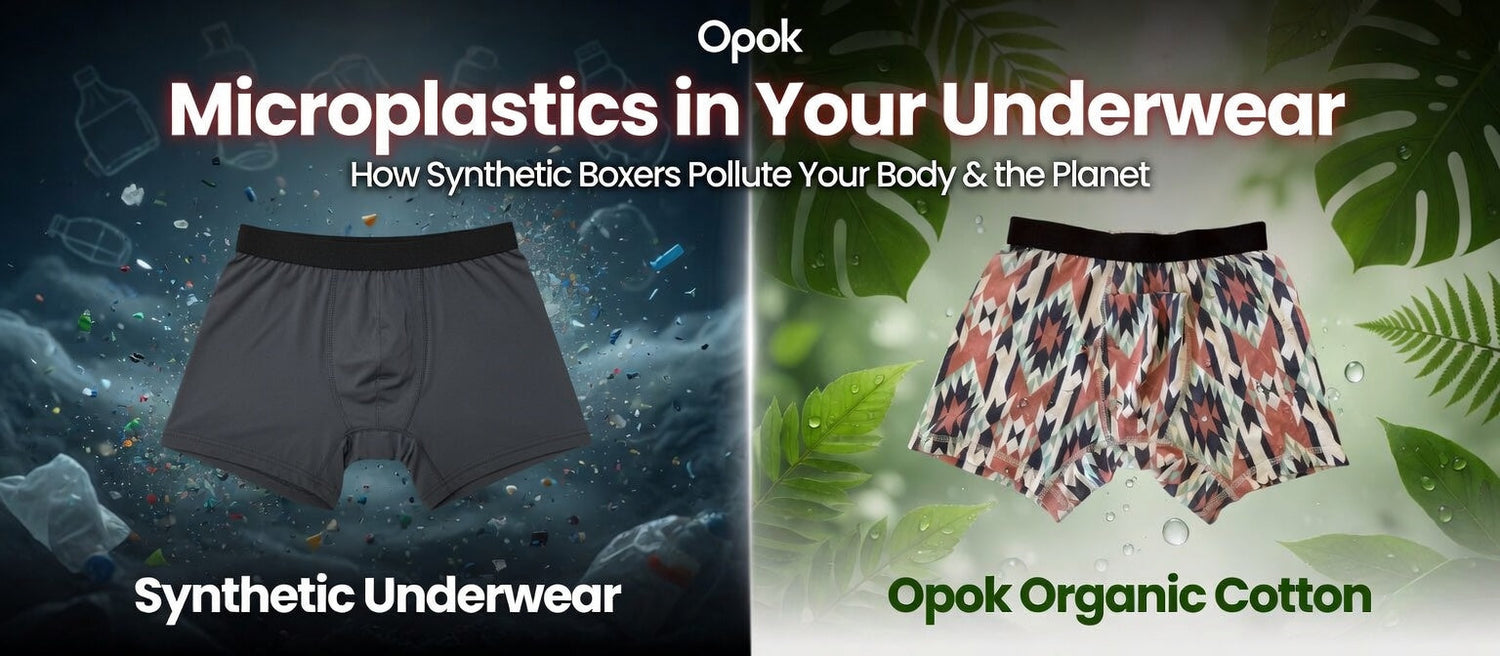
You probably know plastic pollution is a big problem. But did you know your underwear might be one of the worst offenders?
Synthetic underwear (polyester, nylon, spandex blends) sheds thousands of microplastic fibers every single time you wash it. These tiny particles end up in our oceans, soil, food chain… and even in our own bodies.
Here’s what the science shows and why Opok’s organic cotton underwear is a much cleaner choice.
How Bad Is the Microplastic Shedding?
- A single load of laundry with synthetic clothing can release up to 700,000 microplastic fibers.
- Underwear is washed more frequently than most clothes, making it one of the top contributors to microplastic pollution.
- These particles are so small they pass through wastewater treatment plants and end up in rivers, oceans, and drinking water.
Health Risks of Microplastics in Underwear
Microplastics aren’t just an environmental issue — they affect your health too:
- They can be absorbed through the skin (especially in warm, moist areas).
- Studies have found microplastics in human blood, lungs, liver, and even testicles.
- Potential links to inflammation, hormone disruption, and reduced fertility.
- Synthetic fabrics also trap more bacteria and odor compared to breathable organic cotton.
Organic Cotton vs Synthetic Underwear
| Factor | Synthetic Underwear | Opok GOTS Organic Cotton |
|---|---|---|
| Microplastic Shedding | Very High | Zero |
| Breathability | Poor | Excellent |
| Chemical Exposure | High | None |
| Environmental Impact | High | Very Low |
| Longevity | Average | Excellent |
The Good News
Switching to 100% GOTS organic cotton underwear completely eliminates microplastic shedding from your laundry.
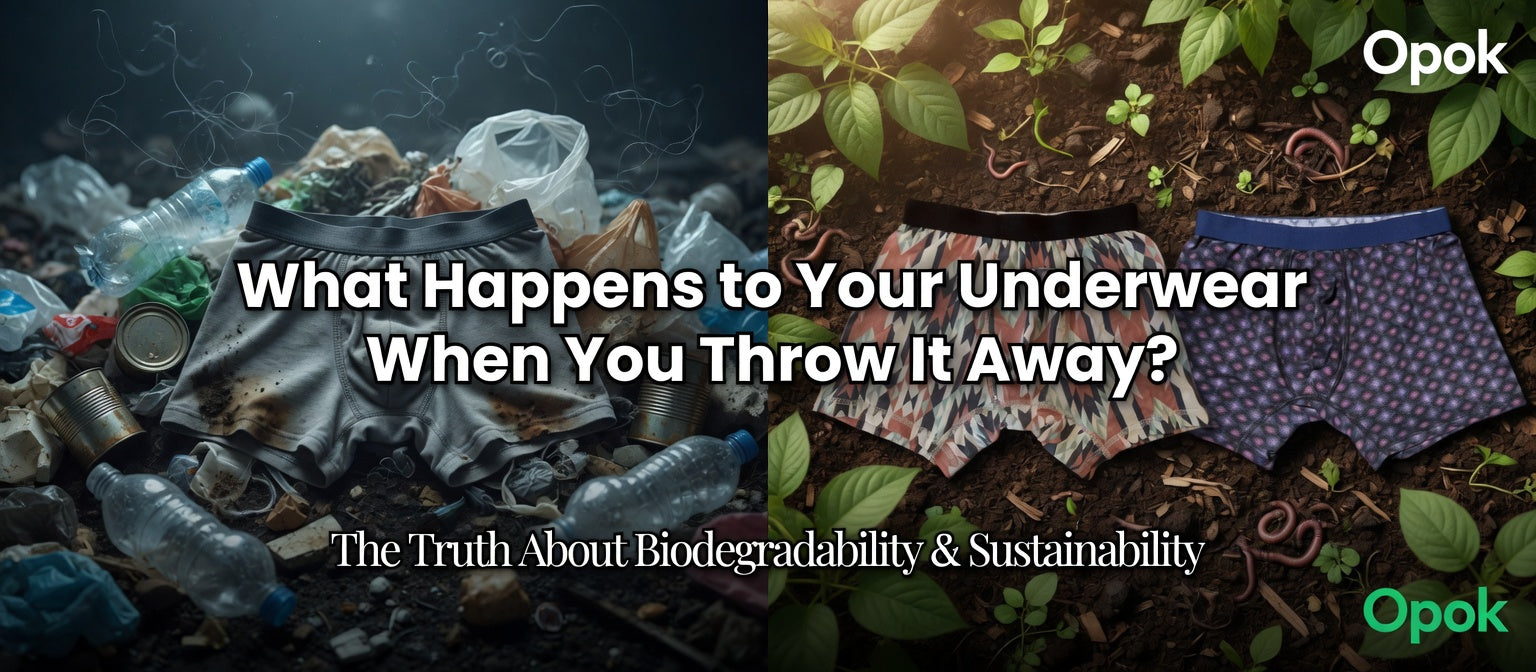
Opok boxer briefs are made from natural plant fibers that break down naturally and don’t release harmful microplastics into the water supply.
Simple Steps You Can Take Today
- Replace your synthetic underwear with organic cotton.
- Use a microfiber-catching laundry bag (good temporary fix).
- Wash less often and in cold water.
- Choose brands that are transparent about materials.
Final Thoughts
Every time you wash synthetic underwear, you’re unintentionally adding plastic to the environment — and potentially to your own body.
Making the switch to truly natural, GOTS-certified organic cotton isn’t just better for comfort. It’s better for your health and the planet.
Ready to stop the microplastic problem at the source? Shop Opok’s collection of GOTS Organic Cotton Boxer Briefs — soft, breathable, and plastic-free.

Leave a comment
This site is protected by hCaptcha and the hCaptcha Privacy Policy and Terms of Service apply.