
Most men don’t think twice about their boxer briefs. But what if the very fabric sitting against your most sensitive areas every single day is quietly sabotaging your hormones, sperm count, and long-term fertility?
Conventional underwear — made from non-organic cotton or synthetic blends — is often loaded with pesticides, harsh dyes, and PFAS (“forever chemicals”). These substances have been linked in multiple studies to reduced testosterone levels, lower sperm quality, and impaired male reproductive health.
At Opok, we believe comfort shouldn’t come at the cost of your health. Here’s what the science actually says.
Why Conventional Underwear Is a Problem
- Heavy Pesticide Use in Conventional Cotton Cotton is one of the most chemically intensive crops on the planet. It uses roughly 25% of the world’s insecticides and over 10% of all pesticides. Many of these are known endocrine disruptors that can interfere with hormone production.
-
PFAS – The “Forever Chemicals” PFAS are widely used in textile processing for stain resistance and durability. Once in your body, they don’t break down easily. Studies have linked PFAS exposure to:
- Lower testosterone levels
- Reduced sperm concentration and motility
- Abnormal sperm morphology
- Damage to testicular function
- Toxic Dyes and Finishing Chemicals Conventional underwear often uses azo dyes and other chemical treatments that can leach onto your skin, especially in warm, moist conditions.
What the Research Shows
Multiple peer-reviewed studies paint a concerning picture:
- PFAS and Sperm Quality: Research published in Frontiers in Endocrinology and Environmental Health Perspectives shows that higher PFAS levels are associated with lower sperm count, reduced motility, and poorer morphology. Prenatal exposure to PFAS has also been linked to impaired reproductive function in adult sons.
- Testosterone Suppression: PFOS and PFOA (common PFAS) are associated with significantly lower testosterone levels — similar to patterns seen in infertile men.
- Animal & Human Evidence: Studies on both animals and humans wearing polyester or chemically treated fabrics have shown measurable drops in sperm production and hormone levels. Switching to natural fibers often reverses the effect.
The scrotum is highly absorbent and sensitive. Anything you wear there has direct, prolonged contact with the areas responsible for testosterone and sperm production.
Why GOTS Organic Cotton Underwear Is the Smarter Choice
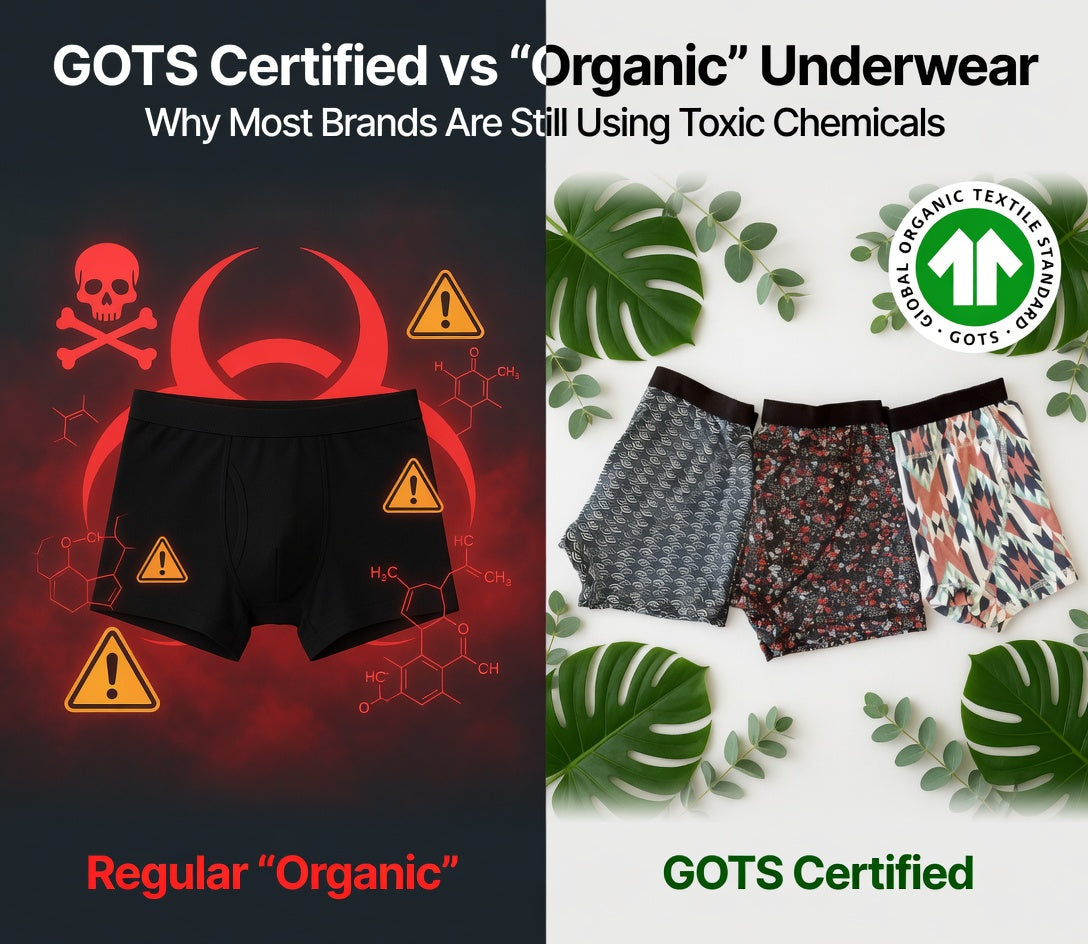
GOTS (Global Organic Textile Standard) is the strictest certification for organic textiles. It bans:
- Toxic pesticides and GMOs in farming
- Harmful dyes and heavy metals in processing
- PFAS and other endocrine-disrupting chemicals
Opok’s boxer briefs are made from GOTS-certified organic cotton and natural dyes. They deliver superior comfort while eliminating the hidden chemical load found in most mainstream underwear.
Benefits you’ll actually feel:
- Better breathability (less heat and moisture buildup)
- Reduced risk of irritation and long-term chemical exposure
- Peace of mind knowing you’re protecting your hormonal health
Simple Steps to Protect Yourself Today
- Switch to certified organic cotton — especially for underwear and basics.
- Avoid polyester and synthetic blends for daily wear.
- Check for GOTS or OEKO-TEX certifications.
- Wash new underwear before wearing to reduce initial chemical residue.
Final Thoughts
Your underwear might seem like a small detail, but when it comes to hormones and fertility, the details matter. The science is clear: reducing exposure to endocrine-disrupting chemicals in clothing is one of the easiest, most practical steps men can take for long-term reproductive health.
Ready to upgrade? Explore Opok’s collection of GOTS-certified organic cotton boxer briefs — insanely soft, breathable, and made without the toxic chemicals hiding in conventional options.
Shop Now → Opok Organic Boxer Briefs
Have you noticed a difference after switching to organic underwear? Share your experience in the comments below.


Leave a comment
This site is protected by hCaptcha and the hCaptcha Privacy Policy and Terms of Service apply.